 Hard. Easy. Boring. Someone else's pieces always look better. But that is just a farce. God tells us that no good thing does He withhold from us who are right with Him (Psalm 84:11). When we are tempted to envy someone else's life pieces we can choose instead to reiterate to ourselves (and express to God) the Truth.
Our God is good. He is trustworthy to give us good. He promises His children that all things will work out for good. (However, there is no promise that we will instantly see or understand this good.) Our Savior loves us. He gave you your pieces and me my pieces out of love. He promises that, regardless of the pieces or how badly I have messed up His pieces, He will never leave us or forsake us. Puzzles have easy parts and hard parts and boring parts, but all those sections come together to form the artist's plan. Life has easy parts and hard parts and boring parts, but for those who follow Christ all those sections come together to complete His plan. 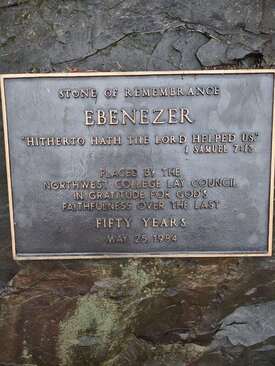 A field of mixed flowers. The beach with toys and crabs. A crowd of people. Sometimes the puzzle pieces we get stuck with are MONTONOUS. They aren't hard or easy. They are just a lot of the same pieces, over and over again.
Life sometimes seems like that. Our pieces are MONTONOUS. The kids are sick again. The car broke down again. There isn't enough money for vacation again. At least hard pieces drive us to God in our distress. At least easy pieces are enjoyable. But when "every" life piece God gives us is the same, it's easy to grow bored and lose our focus on Christ. It is in the mundane that we are called to look up -- out of the diapers and the paperwork and the vacuuming -- and fix our gaze on our Savior. He knew and did the need-to-do parts of life. And He realized that those boring parts of life prepare us for the hard and the easy parts. In the mundane we have the opportunity to seek Him, grow in faithfulness, and live as the new creatures He has made us to be.  A hot air balloon. The barn. A vase of tulips or a basket of apples. Sometimes the puzzle pieces we get stuck with are EASY. Everything flies together. 1. 2. 3. No delays, no hiccups. It is puzzling at its very finest.
Life sometimes seems like that. Our pieces are EASY. Health. Happiness. A pay raise at work after a wonderful vacation. A new baby on the way. When "every" life piece God gives us is perfect, it's a simple thing to take it for granted, to want even more, or use it all selfishly. It takes intentional work to steward our gifts wisely, consciously pursue contentment, and thank God for those blessings He has inserted into our lives. And the promises is that when we do these things -- not that our blessings will never be taken away, but that we will glorify our God and live in the joy of His presence (Psalm 16:11). The sky. The ocean. A starscape or a forest. Sometimes the puzzle pieces we get stuck with are HARD. Nothing seems to go together. There are no clues to use for fast-tracking our part of the puzzle. It is a painstaking exercise in what seems like futility. Life sometimes seems like that. Our pieces are HARD. Death. Disease. Strained relationships. And strained backs and necks and hamstrings. When "every" life piece God gives us is the same black color, it's frustrating, confusing, crushing, and so many other "ings". It's easy to forget that God has the picture and right now He is asking us to build the starscape. It will be painful. We may not understand. But God's promise is that if we do things His way -- it will be beautiful. It will be valuable. It will be worthwhile (Romans 8:18).   Life is like a puzzle, a puzzle done without the benefit of a picture. But you know what is interesting: The picture really only helps if you are doing the puzzle alone. If you are doing a puzzle as a group, where I put together the horse, you put together the flowerbed, and he puts together the tree, we don't need the picture. In fact, we do our best work when each of us focuses on our own section instead of meddling with someone else's.
In life only God gets the full picture (as much as some of us may want to borrow His :0). And this is a good thing, because each one of us has our own pieces we are supposed to be focusing on -- our unique ways to support Christ's kingdom. We are not building alone, each of us is busy working our own part of God's kingdom -- His puzzle. So have a happy 2024 -- another year of building God's puzzle in our lives and encouraging others as they do the same.  This week between Christmas and New Year's has special potential
to be an intentional pause in the calendar. Downtime. A week-long chance to revel in the grace and ongoing presence of our Savior during last year and fully submit the New Year to Christ for His purposes and plans. As we look back, we know, He has been faithful, and as we look forward, we know, He will always be. May these unique days allow you to shed your worries, and be enveloped in worship of our Lord and Redeemer Jesus Christ. Have a blessed New Year. 
John 10:27-30 We follow in the footsteps of those first “men of old” – both the shepherds and the wise men. They knelt at His side and worshipped Him looking forward to His life and redeeming work. We kneel at His throne and worship Him looking back on His finished work of salvation. And during this season with the bustle and busyness, it is important to slow down and worship Christ again “as with gladness” of “men of old”. That Baby born in a manager is the Gracious God, the heavenly King, and the Holy Jesus – the One Who Saved His People, you and me, from their sins. How can you worship God in a special way today?  Revelation 3:20-21 Christmas changed the world forever. It changed eternity forever. And it can change where you spend eternity for forever. All of us were separated from God by our sin -- Jesus Christ was born to bridge that gap. He threw open heaven’s doors to whoever believes in Jesus as Lord and Savior. As Revelation tells us, He stands at our heart’s door and knocks waiting for us to invite Him in. Today is the day to invite Jesus into your life to have His way more fully and pray that many (especially those you know) will grasp the wonder of Christ this Christmas and be changed forever. 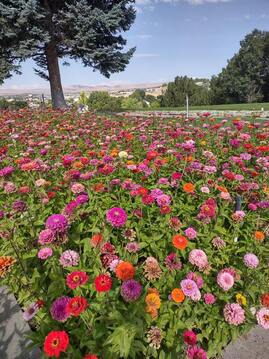 Revelation 19:11-16 Every year brings its own version of “hate is strong”, and some years, evil looks unstoppable – like the Civil War of Longfellow’s day. This feeling of defeat can be even more overwhelming in the shadow of Christmas. Like the poet, looking at the lights and presents, many people experience doubts and depression instead of hope and joy. It’s human. But in those moments instead of focusing on the trappings – it’s time to lift our eyes to Jesus because Christmas is about Him, the King of kings, and Lord of lords. His authority is absolute and His power unchallengeable. He is truth. His victory is certain. And even when we do not feel it, His loving hand and gaze rests on us to comfort and guide us in the way we should go.  |
The AuthorCome with me as we grow in fellowship with each other and our Savior to whom belongs the Amazing Escape from sin and death and the Amazing Journey into glorious life. Archives
April 2024
Categories |
 RSS Feed